The short answer
Before the detail, here is the headline: support and adjustability matter far more than the seat material. A well-supported mesh chair and a well-supported padded chair will both serve you well; an unsupportive chair will let your back down whatever it is covered in. So treat the material as a preference rather than a deciding factor. That said, there are real, practical differences between mesh and leather or leatherette, and the right choice comes down to how warm you run, how your room is heated, how long you sit and the look you want. Let us take each material on its merits.
The case for mesh
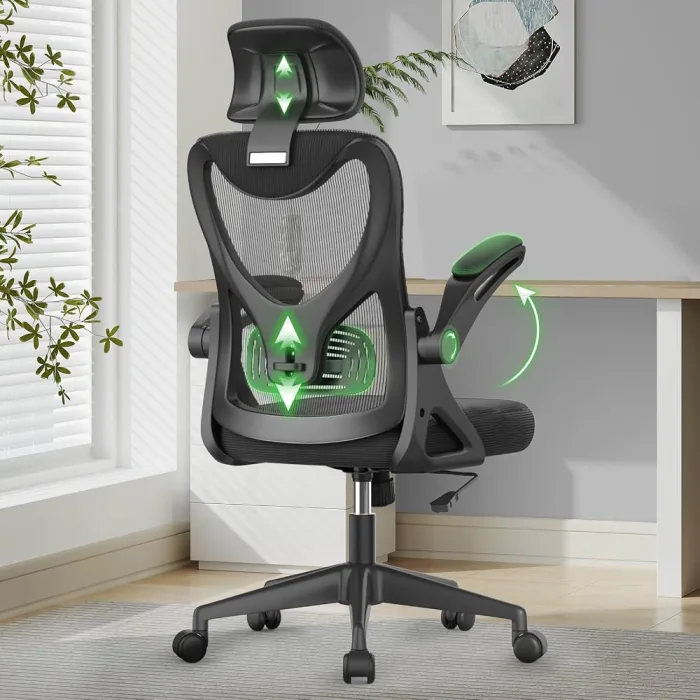
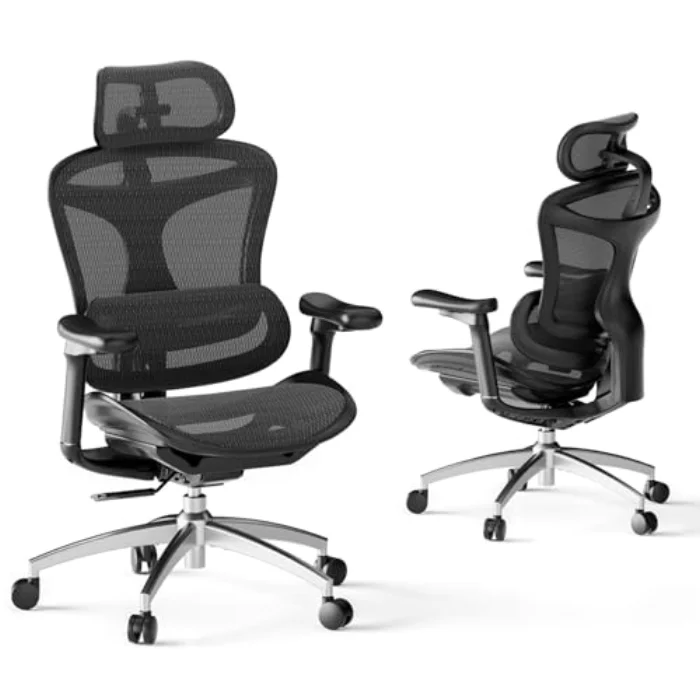
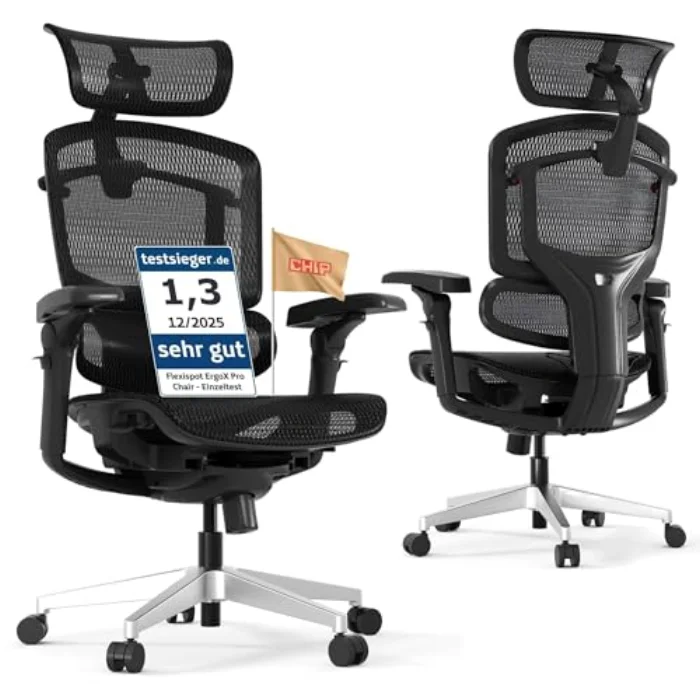
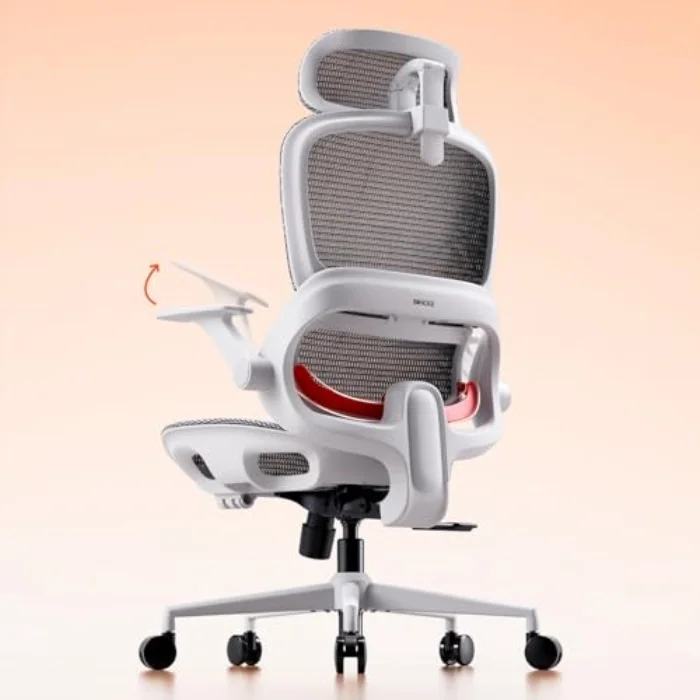
Mesh is the material of choice for most modern ergonomic chairs, and for good reasons. Its biggest advantage is temperature: mesh breathes, so air moves through it and heat doesn't build up against your back and seat. Over a long day, and especially in a warm room or a British summer, that means no sweaty back, a genuinely noticeable, everyday benefit. Mesh also tends to feel light and supportive, suspending you and spreading your weight evenly rather than sitting you on foam. Chairs like the Sihoo Doro C300 and the Flexispot BS11 Pro use full or partial mesh precisely for this combination of coolness and support.
The trade-offs are modest. Mesh feels firmer than a padded seat, which is great for posture but takes a few days to get used to if you are coming from a cushioned chair. Cheap mesh can sag over time, though good-quality mesh holds up well. And some people simply prefer a softer, more cushioned feel. If you run warm, sit long hours, or want the most supportive, low-maintenance surface, mesh is usually the smarter pick.
The case for leather and padded
Leather, leatherette and fabric-padded chairs win on initial comfort and looks. The moment you sit, a well-padded seat feels plusher and more inviting than firm mesh, and for shorter sittings or for people who find mesh too hard, that cushioned feel is genuinely preferable. Padded chairs also tend to look more traditional and executive, which some people want in a formal study or a video-call backdrop. A chair like the Secretlab Titan Evo shows how good a padded chair can be when it pairs that cushioning with a proper adjustable lumbar, so you get plushness without sacrificing support.
The trade-offs run the other way from mesh. The big one is temperature: padded and especially leatherette surfaces trap heat, so over a long day or in a warm room you will feel warmer than you would on mesh. Real leather needs a little care to stay looking good, and cheaper leatherette can crack or peel over years of heavy use. And without a good lumbar system, a soft seat can let you sink into a poor posture, which is why support, not padding, should still drive your decision.
Which should you choose?
Match the material to how you work. Choose mesh if you run hot, sit long hours, work in a warm room, or simply want the coolest, most supportive surface with the least fuss, for most full-time desk workers, this is the sensible default. Choose padded or leather if you prefer a soft, cushioned feel from the first second, you sit in cooler conditions, or you want a more traditional, executive look and don't mind a little extra warmth. If you genuinely can't decide, a chair like the Branch Ergonomic Chair splits the difference with a mesh back for airflow and a padded seat for comfort, which is a sensible middle path. Whatever you pick, confirm the lumbar support and adjustability are good first; the material is the finishing touch, not the foundation.