Support and adjustability: the decision that matters most
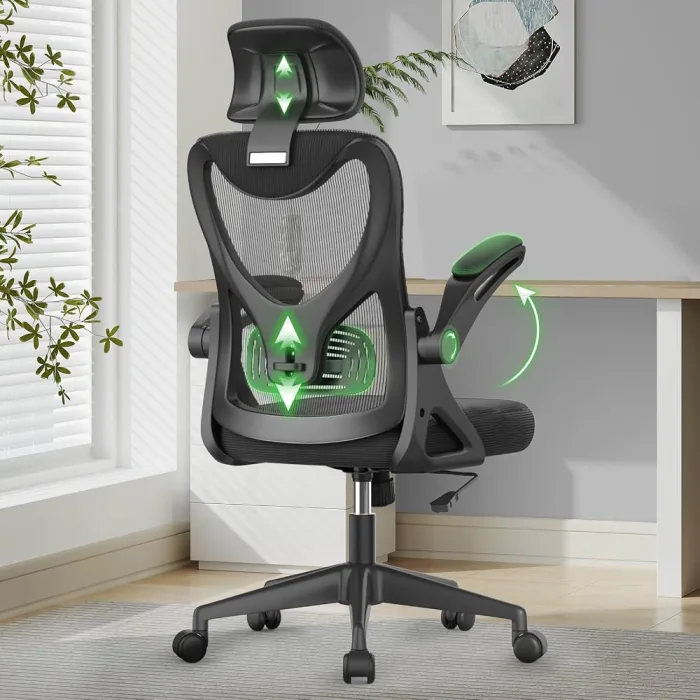
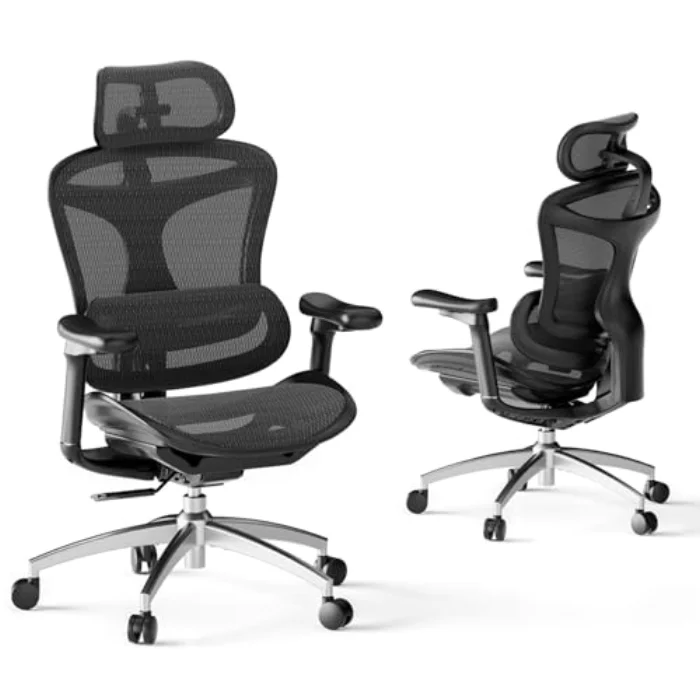
Above everything else, an office chair has one job: to support your body through a long day so your back doesn't pay for it. Two things decide whether it succeeds. The first is lumbar support: a pad or contour that fills the natural inward curve of your lower back so your spine isn't slumping forward. On the best chairs this is adjustable, or even self-adjusting as on the Sihoo Doro C300, so you can place the support exactly where you need it. The second is adjustability: seat height, armrests, recline and ideally seat depth, so the chair fits your proportions rather than the other way round.
Why does this matter more than the brand or the looks? Because a chair that doesn't fit you can't support you, however expensive it is. Seat height should let your feet sit flat with your knees roughly level with your hips. Armrests that move let your shoulders drop and take strain off your neck. A lockable recline lets you lean back and unload your spine through the day. When you are choosing, judge the support and the adjustment range first; treat everything else as secondary. Our guide to the best ergonomic office chairs goes deeper on each adjustment.
Mesh vs padded: it matters less than you think
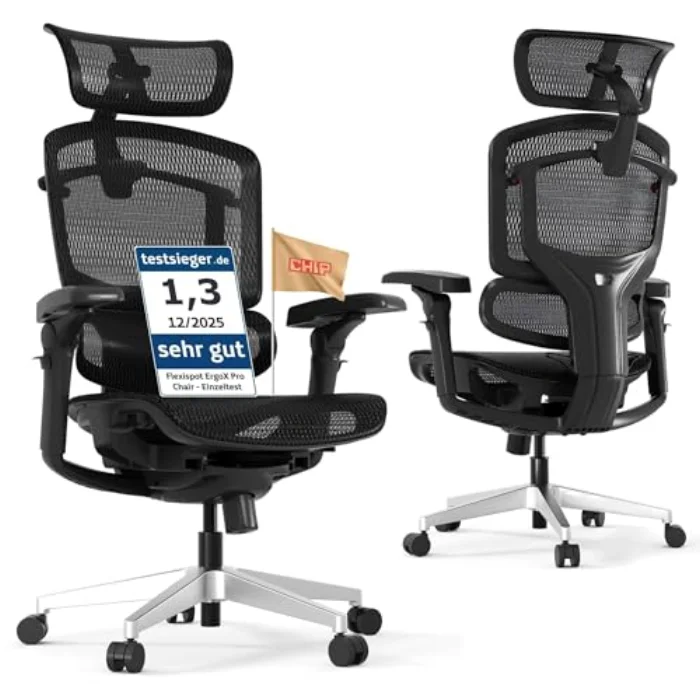
People agonise over mesh versus padded, but it is one of the less important choices. Mesh breathes, so it keeps you cool over a long day and in a warm room, and it tends to feel light and airy; chairs like the Flexispot BS11 Pro and the Sihoo Doro C300 use it for exactly that reason. Padded and leatherette seats, as on the Secretlab Titan Evo, feel plusher the instant you sit and look more traditional, but they run warmer. Neither is inherently better. Choose based on whether you run hot, how your room is heated and the look you want, and don't let the material distract you from support, which matters far more. We cover the trade-offs in full in our mesh vs leather guide.
How much should you spend?
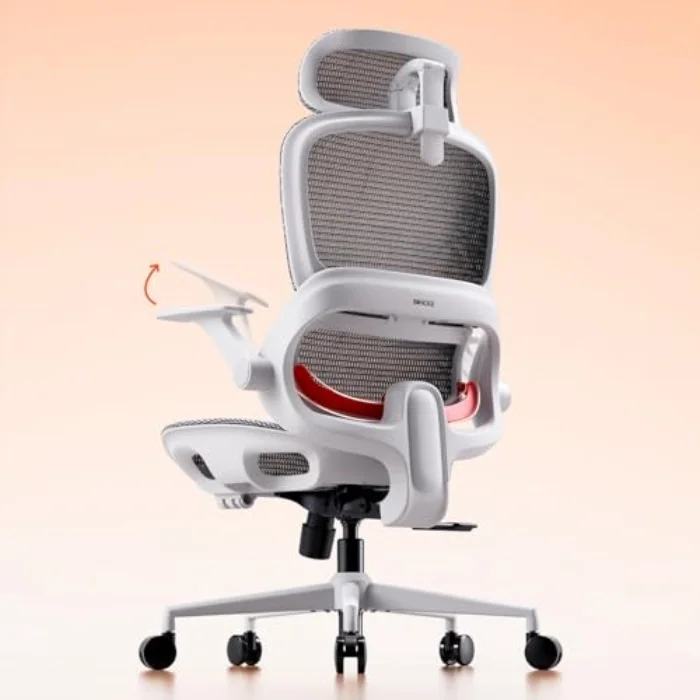
The right budget scales with the hours you sit. At the budget end, around £140, a chair such as the Sihoo M57 gives you genuine ergonomic features without the refinements, ideal for occasional use or a second desk. In the mid-range, roughly £270 to £550, you reach the sweet spot: chairs like the Sihoo Doro C300 and the Secretlab Titan Evo deliver real support and solid build for sensible money, and this is where most full-time desk workers should look. At the premium end, the Herman Miller Aeron costs far more but is built to last many years and is fully serviceable, so spread across a decade of daily use the cost looks far more reasonable. Spend in proportion to how long you sit, and you won't overpay or underbuy.
Features worth paying for, and ones you can skip
A few features genuinely earn their place. Adjustable lumbar support is the one to insist on; it is the feature that protects your lower back. Adjustable armrests that move in several directions matter for your shoulders and neck. A lockable recline lets you unload your spine through the day. A headrest is worth having if you lean back to think or take calls. And on a chair you plan to keep, a long warranty: seven years on the Branch, twelve on the Aeron, is a good signal of build quality.
Other features are nice-to-have rather than deciding factors. A footrest or a fancy synchro-tilt mechanism is pleasant but not essential. Extravagant styling and bold colours are purely personal. And don't be swayed by inflated weight ratings or vague "ergonomic" marketing; what counts is the concrete adjustment range and the quality of the lumbar support, both of which you can check on the spec and confirm in reviews like ours.
Setting up your new chair
A great chair set up badly is just an expensive bad chair, so spend ten minutes getting it right. Set the seat height first, so your feet rest flat and your knees are roughly level with your hips. Position the lumbar pad in the small of your back, where you feel the natural inward curve. Set the armrests so your shoulders relax and your forearms rest level with the desk. Then set the recline tension so you can lean back with a little resistance rather than tipping. Finally, remember that no chair replaces movement: stand up, stretch and walk around every half hour or so. The best posture is the next one, and the chair is there to make good posture easy, not to hold you rigid all day.